The quick estimate
- Measure the length and width of the driveway in metres and multiply them to get the area.
- Decide how thick the new layer should be once it’s compacted. For a top-up on a sound base, 50 to 100 mm is common.
- Multiply the area by the thickness in metres.
- Add about 20 to 30 percent, because loose rock compacts down.
Example: a driveway 30 m long and 3 m wide is 90 square metres. A 75 mm compacted layer is 90 × 0.075 = 6.75 cubic metres. Add 25 percent and you need about 8.4 cubic metres of loose rock.
This is a rough guide only. The driveway is measured on site and the exact quantity goes on the quote.
Rock won’t fix a drainage problem
Most gravel driveways in the hills fail because water runs down them, not off them. Ruts turn into channels, the fines wash out and the rock goes loose. Before new rock goes down, the driveway should be:
- shaped so water sheds to one side or both, not down the middle
- drained with cut-off drains or a table drain beside it, so water leaves the surface at intervals
- compacted in layers, not just tipped and spread
What a repair looks like
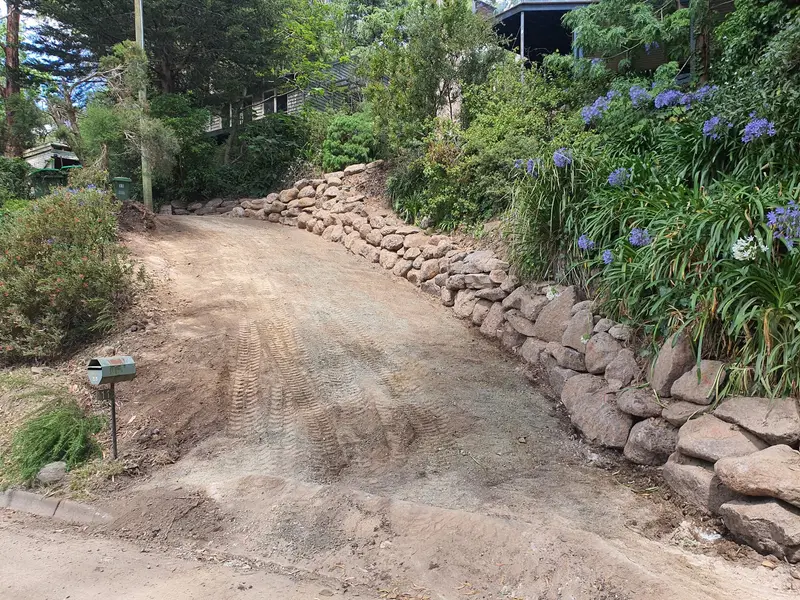
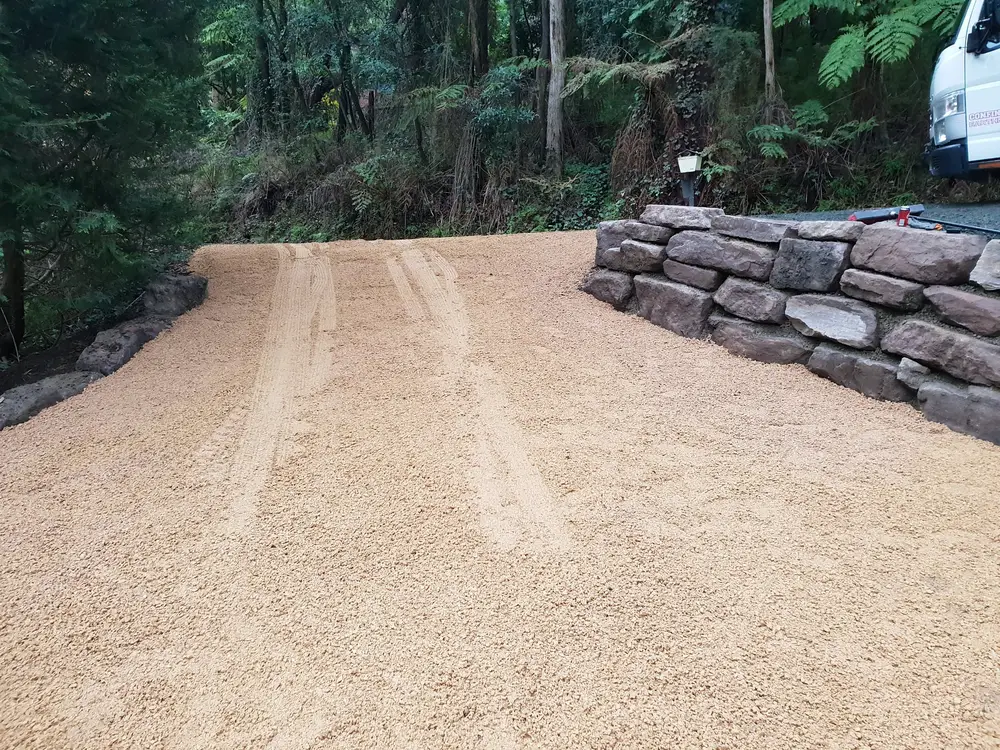
A typical repair is a regrade of the existing surface, reshaping, drains where they’re needed, then new rock spread and compacted in layers.
If your driveway washes out every winter, get in touch and it can be looked at on site.